
Getting Wise About Your Wisdom Teeth
At Louisville Dental Associates, our doctors excel at providing patients of every age with the type of advanced oral health care they need to both look and feel their best. Aging brings about a number of challenges, including the phenomenon of actually growing extra teeth.
Commonly referred to as your wisdom teeth, these teeth are a third and final set of molars that usually begin to form during late teens or early twenties. Despite their reputation for causing trouble, wisdom teeth can actually be beneficial when healthy and properly aligned. Unfortunately, more often than not, wisdom teeth need removing due to a variety of factors.
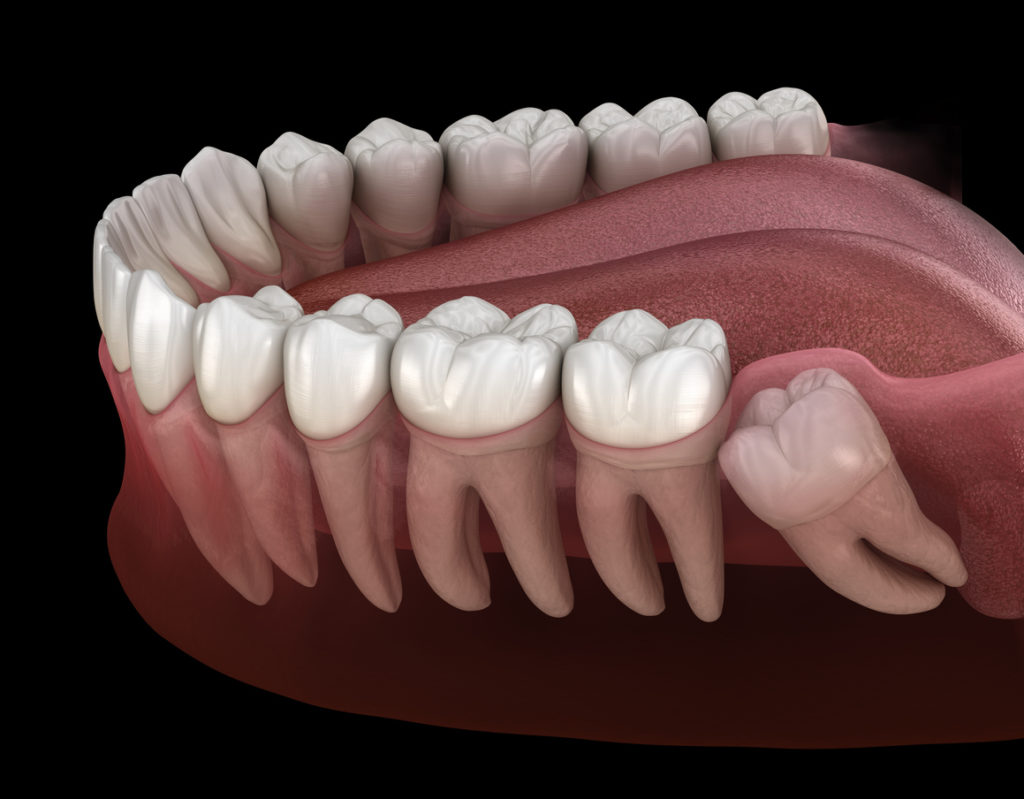
When wisdom teeth form misaligned, they may work to shift your existing teeth out of positions or they may form crooked or cause problems with crowding. Poor alignment of wisdom teeth can crowd or even damage adjacent teeth, nerves in the mouth, and the jawbone.
Wisdom teeth can also become impacted – they are encased within the soft tissue and/or the jawbone and only partially emerge through the gum line. Partial eruption of wisdom teeth enables bacteria to creep beneath the gum line where it can cause an infection to develop, which can then lead to swelling, jaw stiffness, and pain. Teeth that only partially erupt are also more likely to suffer from decay and gum disease, because their hard-to-reach location and difficult positioning makes it more difficult to successfully clean them by brushing and flossing.
Let’s take a look at what patients need to know about their wisdom teeth, and when you may need to schedule a to visit Louisville Dental Associates to have them treated.
How Do I Know if My Wisdom Teeth are a Problem?
Assessing the development of your wisdom requires input from a dentist. While your teeth may seem like they’re forming correctly, much can go on below the gum line you can’t see that could tell a very different story.
To gain a better understanding about how your wisdom will or have formed, our dentists will need to take x-rays periodically to evaluate their development. Depending on the state of your wisdom teeth, you may need to seek the opinion of an oral surgeon for additional evaluation.
Our dentists, or an oral surgeon, may recommend that your wisdom teeth be extracted before any problems have a chance to develop. While it may seem counterintuitive to remove these teeth before absolutely necessary, patients can avoid more painful or complicated tooth extractions later.
Removing a patient’s wisdom teeth is far easier in younger patients, when the wisdom teeth have yet to fully develop and the bone is less dense. Older patients tend to experience more discomfort and longer recovery times.
How are Wisdom Teeth Usually Removed?
How a patient’s wisdom teeth are removed depends on the exact position of their teeth and the stage of their development. Your oral health care provider will be able to give you more information about the removal process and what you can expect during your initial consultation.
A wisdom tooth that has fully erupted through the gum line can be extracted just like any other tooth. However, wisdom teeth that remain concealed beneath gum tissue and embedded in the jawbone will require a more surgical approach. An incision into the gums is required, as is the removal of the portion of bone that sits over the tooth. In most cases, the surgeon performing the removal will break the tooth apart and remove smaller sections, rather than as one large piece.
Wisdom teeth removal is a safe outpatient procedure that will only take about an hour to complete. Patients will be provided medication following the procedure to help deal with any discomfort they may experience.
If your wisdom teeth have formed and are causing you trouble, contact the team at Louisville Dental Associates to schedule an exam and consultation. Our doctors will be able to determine the current state of your wisdom teeth and whether an extraction is necessary.